
Be yourself; Everyone else is already taken.
— Oscar Wilde.
This is the first post on my new blog. I’m just getting this new blog going, so stay tuned for more. Subscribe below to get notified when I post new updates.
Be yourself; Everyone else is already taken.
— Oscar Wilde.
This is the first post on my new blog. I’m just getting this new blog going, so stay tuned for more. Subscribe below to get notified when I post new updates.
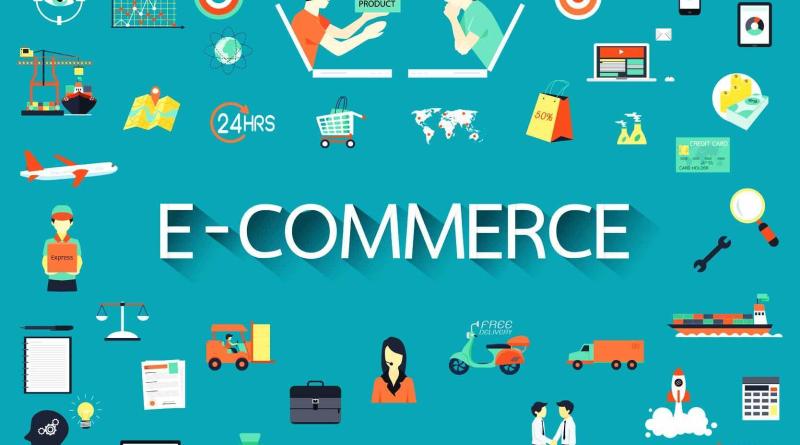
E-commerce is short for Electronic Commerce, and it is the “commercial transaction conducted electrically on the internet” (“E-Commerce: Definition of E-Commerce by Lexico”, n.d.). As Evans, Martin, & Poatsy state, there are several types of e-commerce to include Business-to-Consumer, Business-to-Business, and Consumer-to-Consumer. So, anytime you buy or sell a good online you are participatiing in e-commerce.
Withing the confines of E-commerce lies M-commerce, which stands for mobile commerce. Just how online browsing is no longer relegated to a computer at home, neither is shopping, banking, or even method of payment. “Digital wallets like Apple Pay and Android Pay let customers make in-store purchases without the inconvenience of swiping cards”(Bloomenthal, 2019). M-commerce is currently one of the most widely available and used forms of e-commerce.
Image Source: https://indusdictum.com/2019/12/15/flipkart-amazon-e-commerce-companies-say-no-predatory-pricing-piyush-goyal/
References
Bloomenthal, A. (2019, November 18). On the Move: Mobile Commerce. Retrieved from https://www.investopedia.com/terms/m/mobile-commerce.asp E-Commerce: Definition of E-Commerce by Lexico. (n.d.). Retrieved from https://www.lexico.com/en/definition/e-commerce Evans, A., Martin, K., & Poatsy, M. A. (2020). Technology in action: complete. Harlow: Pearson Education Limited.

There are a hundred different ways to connect with people in the current digital age, the ones we are most familiar with are social networking, email, wikis/blogs, podcasts, and other various forms of streaming media. Social networking ranges from Facebook to SnapChat, and is a great why to stay connected with family and friends; however, it is wise to be cautious as to what you post and share so as to keep yourself secure from online attacks.
Emails are the modern day postage, minus the postal worker. Email’s are a quick and easy way to send formal and informal messages with ease, they also allow the responder the convenience of not needing to reply right away.
Blogs and Wikis are similar yet very different. According to the website https://www.lexico.com, a wiki is “A website that allows collaborative editing of its content and structure by its users”, and a is “A regularly updated website or web page, typically one run by an individual or small group, that is written in an informal or conversational style.” So what the main take away? Blogs are usually a one person show, while wiki’s require a community to constantly update and keep it’s information current.
Podcasts and streaming media can also be lumped together in the same category, as you can stream a podcast just as you can stream a video; Streaming media is the simple process of your internet browser accessing small chucks of data and discarding them, rather than downloading the entire web video/audio file.
Image Source: https://tiaonline.org/industry-priorities/cross-industry/streaming-media/

The Internet was created by the Department of Defense (DoD), which stemmed from two separate needs: One, America, in the 1950’s in response to the Cold War that was raging against Russia, required a more secure computer network; Two, the Department of Defense also was searching for a common language that all computers could understand to bridge the gap of incompatibility. Thus, the Internet was formed out of a need for security and communications. Today, what we consider the Internet, came about from the combined efforts of U.S. Government agencies.
Image source: https://www.slideshare.net/SatishWeb/basics-of-computer-internet-pptx
This is an example post, originally published as part of Blogging University. Enroll in one of our ten programs, and start your blog right.
You’re going to publish a post today. Don’t worry about how your blog looks. Don’t worry if you haven’t given it a name yet, or you’re feeling overwhelmed. Just click the “New Post” button, and tell us why you’re here.
Why do this?
The post can be short or long, a personal intro to your life or a bloggy mission statement, a manifesto for the future or a simple outline of your the types of things you hope to publish.
To help you get started, here are a few questions:
You’re not locked into any of this; one of the wonderful things about blogs is how they constantly evolve as we learn, grow, and interact with one another — but it’s good to know where and why you started, and articulating your goals may just give you a few other post ideas.
Can’t think how to get started? Just write the first thing that pops into your head. Anne Lamott, author of a book on writing we love, says that you need to give yourself permission to write a “crappy first draft”. Anne makes a great point — just start writing, and worry about editing it later.
When you’re ready to publish, give your post three to five tags that describe your blog’s focus — writing, photography, fiction, parenting, food, cars, movies, sports, whatever. These tags will help others who care about your topics find you in the Reader. Make sure one of the tags is “zerotohero,” so other new bloggers can find you, too.
Have a WordPress.com account? Log in now.

